Your guide to informed care
Understanding GLP-1 treatment, one step at a time.
Considering medical weight management? Learn what these medicines do, what you may experience, and when to reach out for help.
THE PRACTICAL GUIDE
GLP-1 basedweight managementWhat to ask · What to expect · When to get help
Start here
There is more to treatment than a prescription.
GLP-1 based medicines may help with weight management alongside changes in eating and activity. The right option, if any, depends on your health history, other medicines, goals, and a clinical assessment.
Use this page to prepare for a conversation with your clinician. It is general education, not a dosing plan or a substitute for your own medical advice.
01 · What to expect
Pay attention to how you feel.
Some people have nausea, vomiting, constipation, diarrhoea, stomach discomfort, or tiredness, especially around treatment changes. Experiences vary, and a symptom that persists or interferes with eating and drinking deserves a conversation with your clinician.
Tell your clinician about your medical conditions and everything you take, including diabetes medicines, before starting treatment. Discuss pregnancy plans or breastfeeding as well.
02 · Everyday care
Small, steady habits still matter.
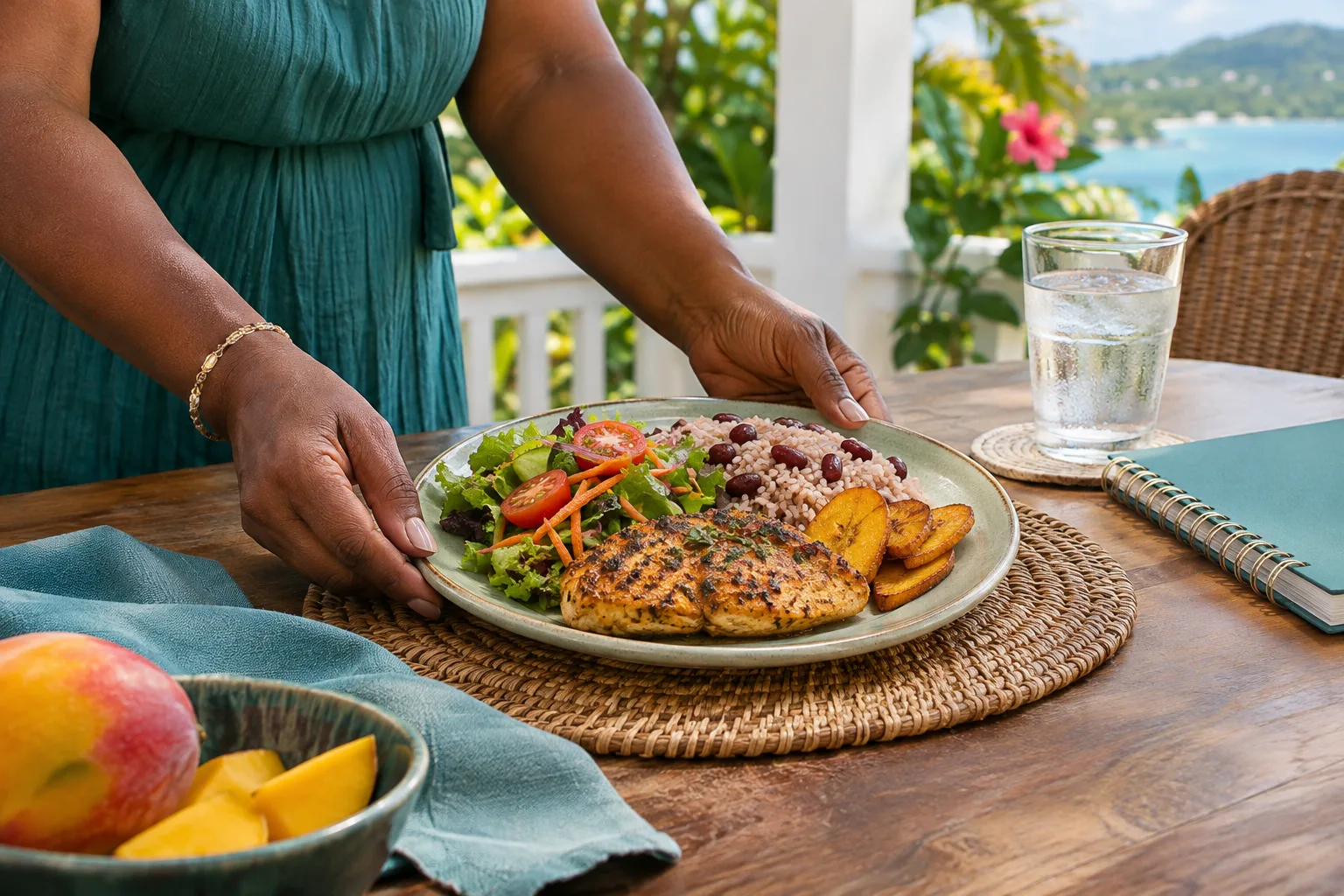
Medication is one part of a weight management plan. Eating enough nourishing food, drinking fluids regularly, and keeping up appropriate activity help support your health as your appetite changes. If nausea occurs, smaller meals and bland, lower-fat foods may be easier to manage.
Keep scheduled reviews. They are a chance to discuss side effects, your food intake, progress, and whether your current plan remains right for you. Do not change a prescribed dose on your own.
03 · When to get help
You do not have to guess.
Contact your prescriber if side effects are severe, persistent, or troubling, especially if vomiting or diarrhoea makes it difficult to keep fluids down. Seek urgent medical attention for severe, ongoing abdominal pain, signs of a serious allergic reaction such as trouble breathing or swelling of the face or throat, or symptoms of significant dehydration.
Tell your care team if you use insulin or certain other diabetes medicines: low blood sugar may be more likely when these are combined with some weight management medicines.

Care at Project Wellness MD
A plan shaped around you.
Dr. Masania Moore is a General Practitioner and founder of Project Wellness MD. Her doctor-led approach starts with an individual consultation and continues with reviews and practical support.
Get startedSend an enquiry →Further reading
General education from public health and prescribing sources. Your own clinician’s advice and your medicine’s leaflet take priority.